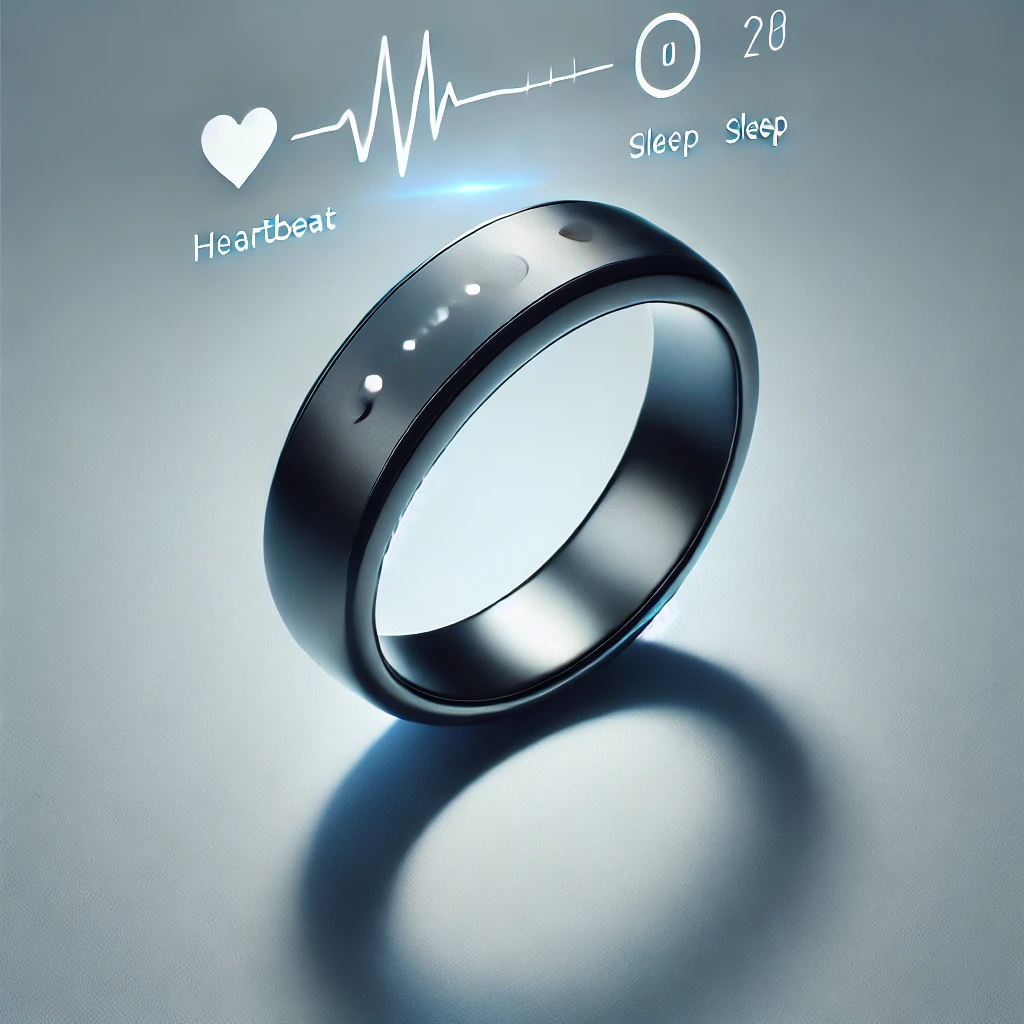
In the rapidly evolving landscape of wearable technology, smart rings have emerged as a groundbreaking innovation that’s transforming how we monitor our health. These compact devices, worn discreetly on a finger, are challenging the dominance of traditional smartwatches by offering sophisticated health tracking capabilities in an elegant, minimalist form factor.
The Evolution of Wearable Health Technology
The wearable technology market has witnessed a significant shift in recent years, with smart rings gaining prominence as a more sophisticated alternative to conventional fitness trackers. This surge in popularity isn’t merely a trend; it represents a fundamental change in how people approach personal health monitoring.
A recent research study1 evaluating the Oura Ring highlights the growing interest in smart ring technology. This study explored the feasibility and acceptability of using the Oura Ring for health tracking in middle-aged adults. As people become more aware of the importance of monitoring their health, smart rings offer a convenient and unobtrusive way to do so.
This surge in popularity can be attributed to several factors:
- Increased Focus on Health and Wellness: People are becoming more aware of the importance of monitoring their health, and smart rings offer a convenient and unobtrusive way to do so.
- Growing Wearable Tech Adoption: The widespread adoption of wearable technologies like smartwatches has paved the way for smart rings, offering users a more discreet and fashionable alternative.
- Technological Advancements: Continuous improvements in miniaturization and battery life have made smart rings more appealing and functional.
- Fashion and Customization: As wearables become more fashion-forward, smart rings offer a stylish way to incorporate technology into everyday life
Advanced Health Monitoring Capabilities of Smart Rings
What sets smart rings apart is their sophisticated array of sensors that can capture vital health metrics with remarkable precision. The positioning of these sensors on the finger, where blood vessels run close to the surface, enables particularly accurate readings of various health parameters.
- Heart Rate: Smart rings can continuously monitor heart rate throughout the day, providing insights into fitness levels and potential irregularities. Due to their position on the finger, which is closer to blood vessels, smart rings can provide more accurate heart rate data compared to wrist-worn wearables.
- Heart Rate Variability (HRV): HRV measures the variation in time between heartbeats and is a key indicator of stress and recovery.
- Blood Oxygen Levels (SpO2): This metric is crucial for both heart and respiratory health, and smart rings can track it continuously.
- Sleep Patterns: Smart rings excel at monitoring sleep stages, duration, and quality, providing personalized insights to improve sleep hygiene.
- Activity Levels: Smart rings track steps, distance covered, and calories burned, providing a comprehensive overview of daily activity.
- Skin Temperature: Some smart rings can monitor skin temperature variations, which can be helpful for detecting potential health changes.
- Respiratory Rate: Monitoring breathing rate during sleep can help identify irregularities and potential sleep disorders.
- Postoperative Pain Alleviation: Emerging research suggests that smart rings may even be able to predict postoperative pain alleviation. Machine learning models can analyze the ring data to predict pain levels, potentially leading to better pain management strategies.
The Medical Perspective
Healthcare professionals are increasingly recognizing the potential of smart rings in clinical settings. The continuous stream of health data these devices provide can be invaluable for early detection of health issues and monitoring chronic conditions. Some medical facilities have begun incorporating the ring data into their patient monitoring protocols, particularly for tracking post-operative recovery and managing chronic diseases.
Emerging research suggests that smart rings may even have applications in pain management. Machine learning models analyzing smart ring data have shown promise in predicting pain levels, potentially revolutionizing post-operative care and chronic pain management strategies.
Current Market Leaders and Innovation
The smart ring market has attracted both established technology companies and innovative startups. Samsung’s entry into the market with the Galaxy Ring has brought attention to the potential of smart rings in mainstream consumer electronics. The device offers AI-powered health insights and seamless integration with existing ecosystem devices.
Other notable players include Oura Health, whose latest Ring 4 model has set industry standards for comprehensive health tracking, and Movano’s Evie Ring, which specifically addresses women’s health needs. The Ultrahuman Ring Air has gained attention for its subscription-free model, while RingConn’s Gen 2 focuses on specialized capabilities like sleep apnea detection.

Addressing Technical Challenges
While smart rings offer a promising new frontier in health tech, there are some challenges and limitations to consider:
- Limited Functionality: Compared to smartwatches, the rings have limited functionality. They typically lack screens, which means users cannot easily check the time or view detailed notifications directly on the device. Smart rings often rely on smartphones for more in-depth data visualization and interaction. For example, to see a map of a running route, users would need to carry their smartphone, as most smart rings do not have built-in GPS.
- Accuracy: While smart ring technology has improved significantly, accuracy can still be a concern, particularly for activity and workout tracking. Some users have reported discrepancies between the data tracked by their rings and their actual activity levels.
- Durability: Smart rings are more susceptible to scratches and damage than smartwatches due to their constant contact with surfaces. This is because they are worn on the finger, which is more likely to come into contact with objects throughout the day.
- Cost: Smart rings can be expensive, with some models requiring monthly subscriptions for full functionality. This can be a barrier to entry for some consumers.
- Sizing: Getting the right ring size is crucial for accurate data tracking, and the sizing process can be challenging. Many companies offer sizing kits to help users determine the correct size before purchasing.
- Privacy and Security Considerations: As with any device collecting personal health data, privacy and security are paramount concerns. Smart ring manufacturers implement various security measures, including encryption protocols and secure authentication methods. Users should carefully review privacy policies and understand how their health data is collected, stored, and shared.
The Future Landscape
The smart ring market is projected to experience significant growth in the coming years, potentially outpacing the smartwatch segment. This growth is driven by continued technological advancement and increasing consumer awareness of health monitoring benefits.
Future developments may include expanded capabilities in contactless payments, access control, and gesture-based device interaction. The integration of smart rings into professional environments, exemplified by the US Air Force’s testing for aviator performance optimization, suggests broader applications beyond personal health monitoring.
Conclusion
Smart rings represent more than just another entry in the wearable technology market; they signify a fundamental shift in how we approach personal health monitoring. Their combination of sophisticated health tracking capabilities, unobtrusive design, and growing acceptance in medical settings positions them as a crucial tool in the future of preventive healthcare.
As technology continues to advance and prices become more accessible, these rings are poised to play an increasingly important role in personal health management. Their potential to provide continuous, accurate health data while maintaining user comfort and style makes them an attractive option for health-conscious individuals and healthcare providers alike.
Which started as a show of love, now rings have turned smart and the future extends beyond individual health tracking to potentially transforming healthcare delivery through early detection and continuous monitoring of health conditions. As these devices evolve, they will likely become an integral part of our daily health management routines, bridging the gap between personal wellness tracking and professional healthcare monitoring.
- 4-Week Smart Ring Technology Trial | Research for Me @UNC – Study Details, https://researchforme.unc.edu/study-details?rcid=5796 ↩︎
2 responses to “Smart Rings: The Future of Wearable Health Tech is on Your Finger”
[…] Smart Rings: The Future of Wearable Health Tech is on Your Finger […]
[…] chapter in the ring’s story, where ancient symbolism meets cutting-edge technology. Smart rings represent a convergence of our oldest form of wearable adornment with our newest digital […]