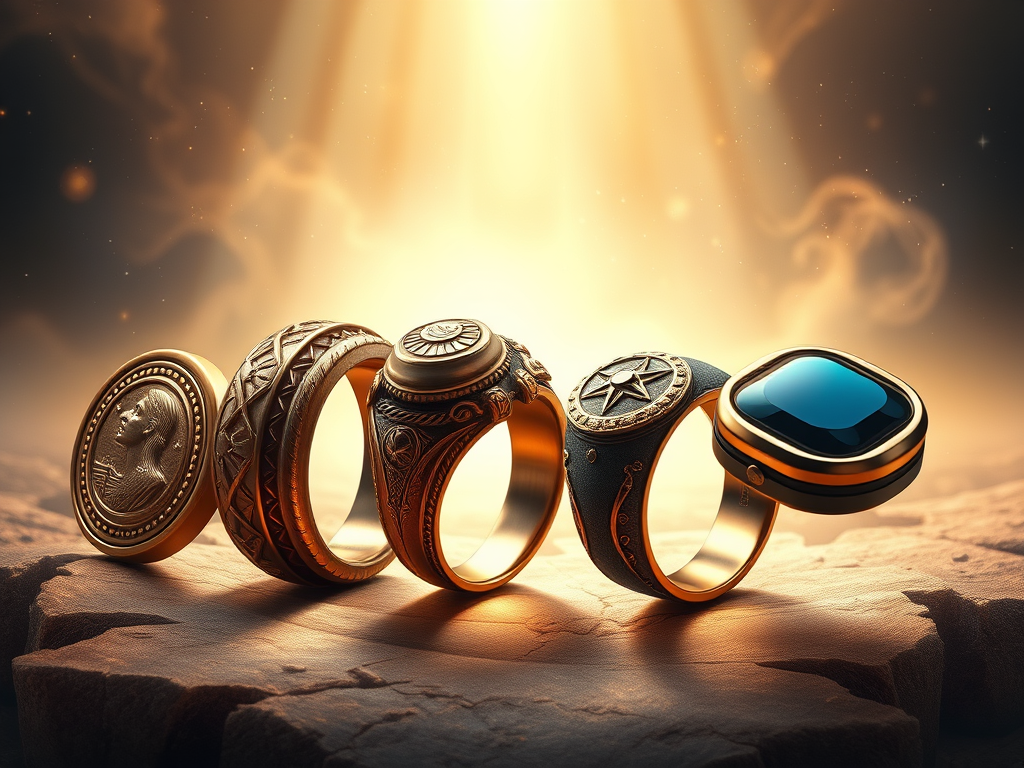
From simple bands of metal to sophisticated digital devices, rings have been constant companions throughout human history. Their evolution tells a fascinating story of technological advancement, cultural significance, and human innovation.
Historical Significance: The Ring’s Journey Through Time
Throughout human history, rings have served as more than mere adornments. They have been symbols of power. They have also been markers of status and bearers of authority. These small circles of metal have significantly influenced human civilization. They range from the mighty pharaohs of Egypt to the merchant princes of Venice. They have shaped it in numerous ways. Their evolution parallels our own journey through time. It reflects advances in metallurgy and changes in social structures. It also represents the eternal human desire to combine beauty with purpose.
Ancient Beginnings and Materials
The story of rings begins in ancient civilizations, where these small circles of metal carried immense symbolic power. Early Egyptian rings, primarily crafted from gold, reflected wealth. They also symbolized a divine connection. The metal’s eternal luster mirrored the gods’ immortality. As trade routes expanded, so did the diversity of materials and techniques. The Phoenicians introduced bronze and copper working. The Romans transformed the humble iron ring into a symbol of martial pride. It also became a sign of civic duty.
The material hierarchy in ancient societies created a visible language of status:
- Nobility wore gold and precious gems, signifying both wealth and divine favor
- Merchants chose silver and bronze, reflecting their middle position in society
- Common citizens wore iron and copper, materials that were both practical and dignified
- Military leaders combined iron rings with gold seals, bridging martial virtue with authority
The Evolution of Craftsmanship
As societies grew more sophisticated, so did their metalworking techniques. The Middle Ages brought revolutionary advances in ring making. Artisans developed methods that influenced jewelry craft for centuries to come. These techniques allowed rings to become more elaborate expressions of art. They used methods like lost-wax casting and intricate filigree work. Rings also became expressions of status.
The Rise of Symbolic Rings
Civilizations flourished and social customs evolved. Rings transcended their origins as symbols of power. They became deeply personal tokens of emotion and commitment. This transformation marked a pivotal shift in human culture. The value of a ring came not just from its materials or craftsmanship. It also came from the sentiments it represented. The journey from status symbol to love token reflects humanity’s growing emphasis on individual relationships and emotional expression.
Love and Commitment Through the Ages
As rings gained technical sophistication, they also acquired deeper emotional significance. The medieval period marked a turning point, as rings transformed from mere symbols of power into tokens of love and fidelity. This evolution reflected broader social changes, as romantic love gained cultural prominence and personal relationships became more publicly celebrated.
This transformation unfolded across distinct periods, each adding new layers of meaning to the ring’s symbolic language:
Medieval Romance (12th-15th centuries)
The age of courtly love introduced rings that spoke directly of romance. Posy rings carried love poems close to the heart, while gimmel rings with their interlocking bands perfectly symbolized the union of two souls. Fede rings, showing clasped hands, made this union visible to all.
Renaissance Innovation (15th-17th centuries)
As European society flourished, ring design reached new heights of artistry. Faceted gemstones caught light in previously impossible ways, while cluster settings and colored enamels allowed for ever more elaborate designs. These innovations set the stage for the modern engagement ring.
The Digital Revolution: Smart Rings Emerge
The 21st century marks a revolutionary chapter in the ring’s story, where ancient symbolism meets cutting-edge technology. Smart rings represent a convergence of our oldest form of wearable adornment with our newest digital capabilities. This fusion isn’t merely about adding technology to jewelry – it’s about reimagining what a ring can be while honoring its historical significance as a personal, intimate accessory.
Technological Integration
Just as ancient rings reflected their era’s highest technologies, today’s smart rings showcase our digital age’s possibilities. This latest evolution maintains the ring’s intimate connection to human life while adding unprecedented functionality. The transition from symbolic to practical power mirrors our broader technological journey.
Health Monitoring Capabilities
Building on the ring’s traditional role as a personal talisman, modern smart rings transform this ancient accessory into a guardian of wellbeing. These devices combine centuries of miniaturization expertise with cutting-edge sensor technology, offering health insights that would seem magical to our ancestors.
Today’s capabilities include:
- Continuous heart rate monitoring that provides deeper health understanding
- Sleep cycle analysis for better rest
- Activity tracking that motivates and guides
- Temperature monitoring for early health warnings
- Stress level assessment for better life balance
Payment and Security Features
In a fitting evolution, smart rings now serve as both symbols and tools of authority – much like their ancient signet predecessors. Modern NFC technology allows these devices to act as secure keys and payment methods, adding practical power to their symbolic significance.
Contemporary applications include:
- Seamless contactless payments
- Secure building access
- Digital transit passes
- Password-free authentication
- Identity verification
The Future Landscape
As we stand at the intersection of tradition and innovation, smart rings are poised to redefine our relationship with technology. The miniaturization of sensors, advancement in battery technology, and growing consumer acceptance of wearable tech suggest we’re only scratching the surface of what’s possible. From environmental monitoring to augmented reality control, the next generation of smart rings promises to expand their capabilities while maintaining the intimate, personal nature that has made rings enduring symbols throughout human history.
Emerging Technologies
As we look to the future, smart rings continue their evolution at the intersection of tradition and innovation. Current developments in miniaturization and battery technology hint at capabilities that would amaze even recent generations. While health monitoring and payments lead current applications, the horizon holds even more promising possibilities.
Market Impact and Consumer Adoption
The growing adoption of smart rings represents more than a technological trend – it’s a continuation of the ring’s eternal role as a marker of human progress. As these devices become more sophisticated and user-friendly, they’re finding their place in an increasingly connected world, much as their predecessors found their place in ancient societies.
From Egyptian pharaohs to modern tech enthusiasts, rings have remained remarkably relevant through thousands of years of human progress. As we look to the future, these small circles of possibility continue to evolve, proving that even our oldest technologies can find new purpose in each era. The smart ring revolution isn’t just about adding digital features to jewelry – it’s the latest chapter in humanity’s ongoing story of innovation and adaptation.
One response to “The Evolution of Rings: From Ancient Seals to Smart Health Monitors”
[…] started as a show of love, now rings have turned smart and the future extends beyond individual health tracking to potentially […]